Previous post
1 month ago


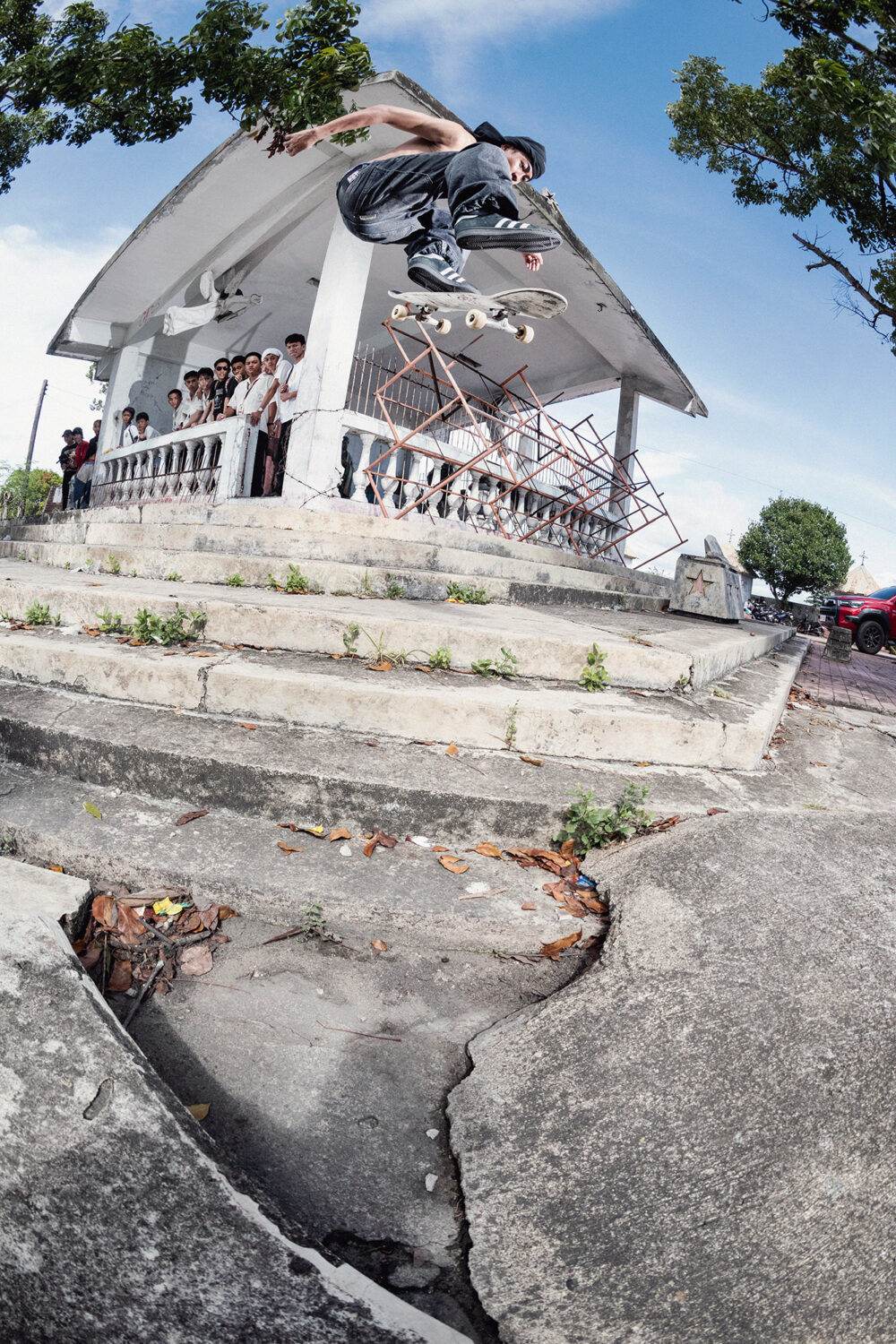
Interview & photography (unless otherwise stated): Genualdo Kingsford
An interview with Push Philippines members Dani Bautista, Anthony Claravall, Daryl Dominguez and Emilio Molave.
Could you briefly explain your connections to the Philippines?
DD – My parents are Filipino and I visited there quite a lot growing up.
EM – I grew up in the UK in a mixed-race family with my dad being Filipino. I visited the Philippines a lot, but never quite lived there.
AC – My parents emigrated to the United States about three months before I was born, so my connection is being Filipino by blood and a little bit by culture, but kind of caught between two worlds.
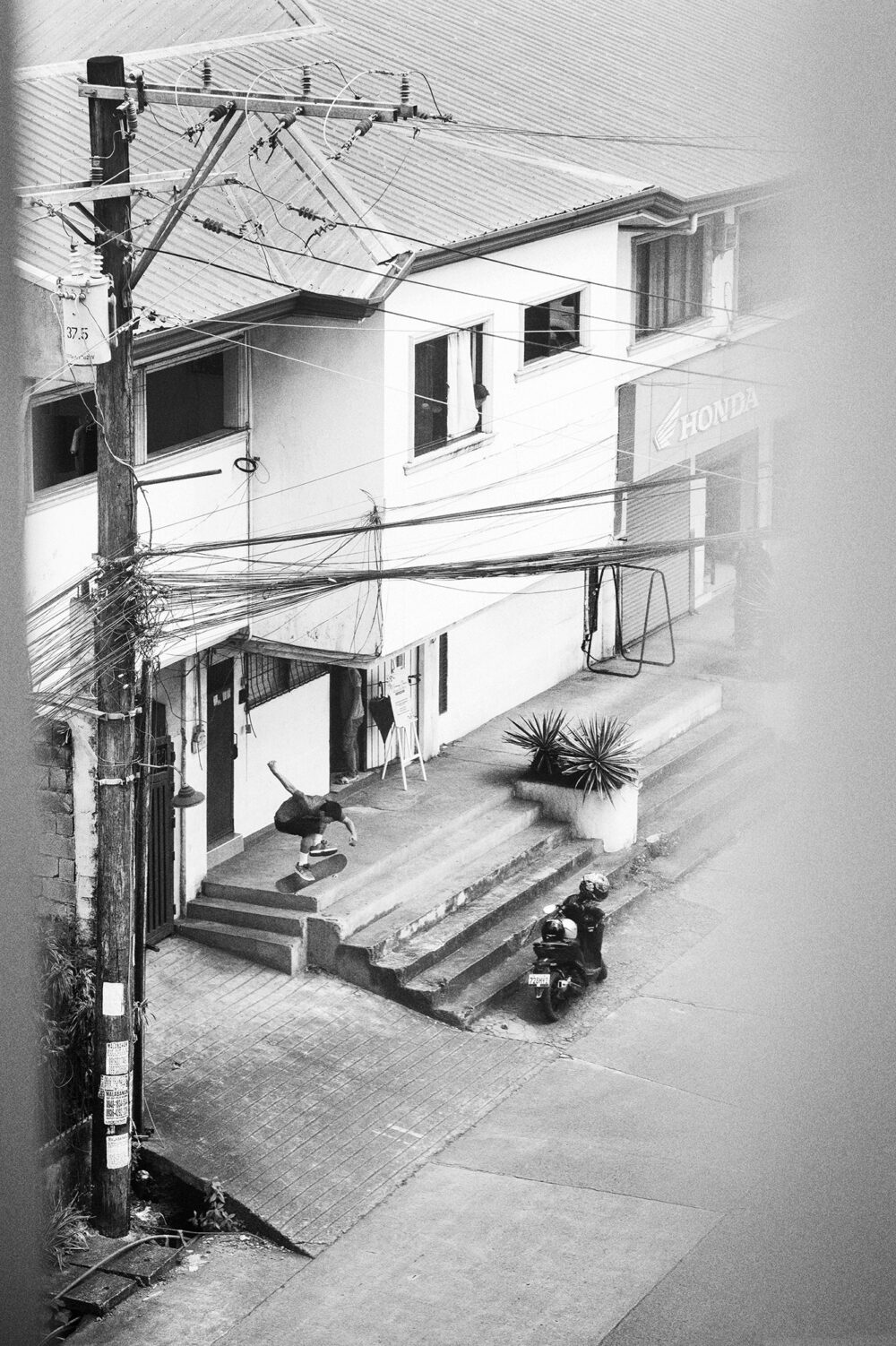
DB – I grew up in Hong Kong but moved to the Philippines for university and eventually stayed and got married.
How did you get involved with Push Philippines?
DD – It all started with me and Emilio. He got in touch with me because I was already doing similar charity work in Nepal. He was into what I was doing and wanted to do something similar in the Philippines. We were able to get quite a lot of donations at that time (summer 2021), because everyone had been through Covid and lockdowns and seemed to have a lot to give. Then, through my Skate Pilipinas (The Skateboarding Association of the Philippines) connections, we got in touch with Dani to facilitate distribution and sent out a box, which dropped in Cebu September or October, 2021. The response on the ground was pretty big and that motivated us to keep doing it.
EM – It grew out of me working in Hotel skate shop in south London. We had a stack of about 20 used boards that people had left and my boss asked me to get rid of them. I knew Daryl did Skate Nepal and that he was Filipino as well. I hadn’t met him at this point, so I messaged him on Instagram, just expecting to send those 20 boards out. We had a conversation, spoke to Vans, and then four boxes of shoes turned up at my house. I was kind of tripping. Then we started collecting more boards from Daryl’s friends around south London. It was just a little idea, and now, with everybody together, it’s grown into this more structured thing.
AC – I was attracted to the programme because it’s very simple and direct. It’s not about trying to get Olympic athletes, we’re just trying to put skateboards in kids’ hands. I’ve had positive but also negative experiences with the Filipino national (skateboard) team, which is based on accolades, medals and achievements. A programme like that is ruled by results, but Push Philippines is just trying to help kids find skateboarding or consider it.
EM – I think it’s important to talk about the balikbayan boxes we use.
That’s a key part of the programme.
EM – Exactly. Back in 2021, we had to figure out how to get the donations to the Philippines. Skateboards aren’t light and shipping product like that can be really expensive, but with the balikbayan system – which uses sea freight – it’s by box, not by weight, so you can send out a massive box and it’s a lot cheaper than using a courier company.
What does balikbayan mean?
DB – If you’re an overseas Filipino worker and you come back to the Philippines, you’re a balikbayan.
EM – So, for example, when my dad travels back to the Philippines, he gets a balikbayan visa because he’s travelling back, and a balikbayan box is exactly the same. The service was set up when a lot of people were emigrating from the Philippines to the UK, the US… Now, it’s worldwide. Anywhere there’s a big Filipino settlement, this service will happen. My family used it – they came to the UK, worked and sent stuff to their relatives back in the Philippines – and now we’re using it too, kind of in the same vein.
AC – We’re all part of the diaspora and we are reconnecting with our roots, I guess.
DD – 100 per cent.

Daryl explained the need for the donation programme succinctly in his Grey interview with Tom Delion last year, but for anyone who hasn’t read that, could you explain why you’re sending skateboard equipment to the Philippines?
AC – Quite literally, people cannot afford skateboards. If you’re focused on having food to eat, then skateboarding is not even in the universe of what’s going to happen. Margie (Didal) is arguably the most famous skateboarder from the Philippines. She’s got international sponsors, she made it to the Olympics, she’s done a lot of things, and she started like that – Dani and our other friends gave her a skateboard. She’s a recipient of that – she is that – and she’s made it to the highest level of skateboarding. Now, she’s a very active part of the programme. We didn’t talk about it, she just said: “OK, I’m down,” and I think that says it all. Not only is Margie part of it, she’s also an example. She’s never bought a skateboard in her life, full price.
DB – Basically, every good skateboarder in the Philippines is like that. You need people to give you skateboards because the ordinary Filipino can’t afford one.
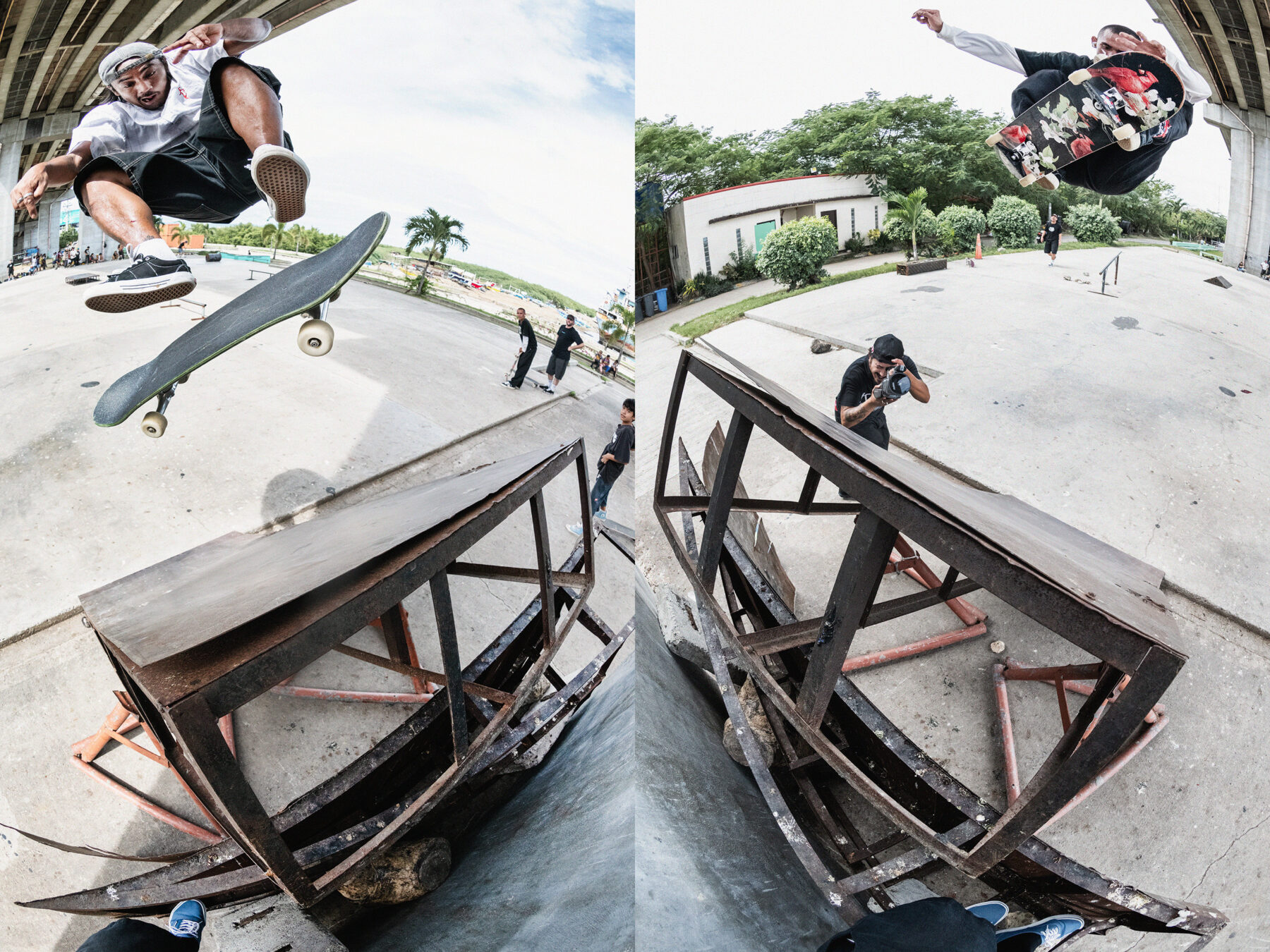
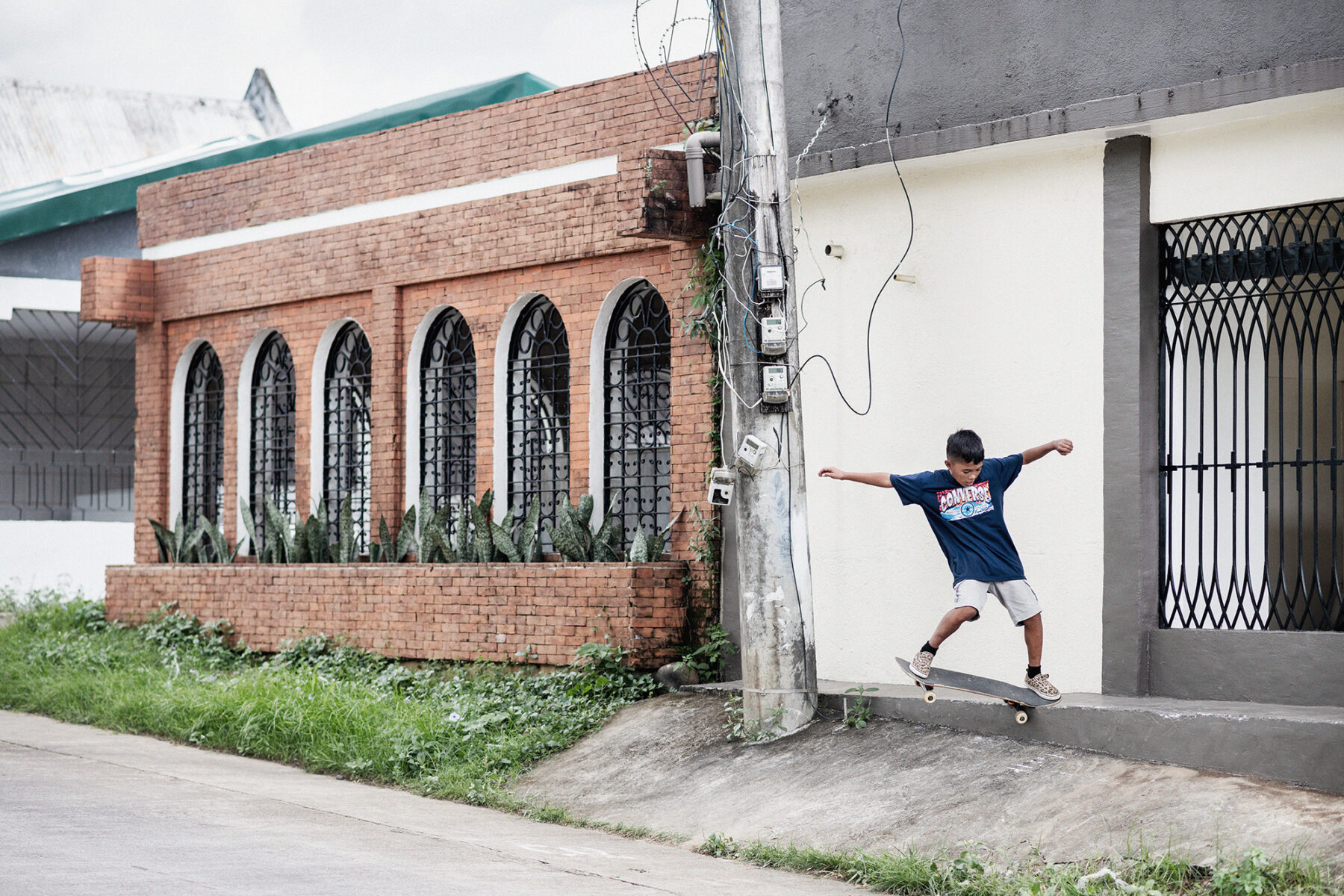
EM – Skateboarding is spread so far and wide globally and maybe we forget that buying a skateboard or getting one for your Christmas present is normal here (in the UK), but the amount of skate-boarders there are in the Philippines and the skateboards they’re skating… Dani’s got some photos of boards that have been nailed back together, or have no pop, no life any more, and these guys are still ripping Pahara (a popular skate spot in Mandaue) so crazily. When we started sending stuff out, we realised that not only was there a big skate scene, but a lot of talent as well. People were skating incredibly well beforehand, with tattered boards, but if you can give them a fresh board and a new pair of trucks, the possibilities are endless.
Are donations exclusively from the UK?
DD – No. More than half are, but people send us stuff from else-where in Europe from time to
time.
DB – Hong Kong and Macao as well.
EM – Dani, tell us about that woman in the States who got in contact with you.
DB – She was a random Lola – like a Filipina grandma – who saw me doing donations on Instagram and decided to donate. She doesn’t skate or anything, she just saw the Instagram Reel and sent me a whole balikbayan box full of shoes and boards.
Emilio, you spent four months in and around Cebu before our trip, filming the local skaters. How was that experience?
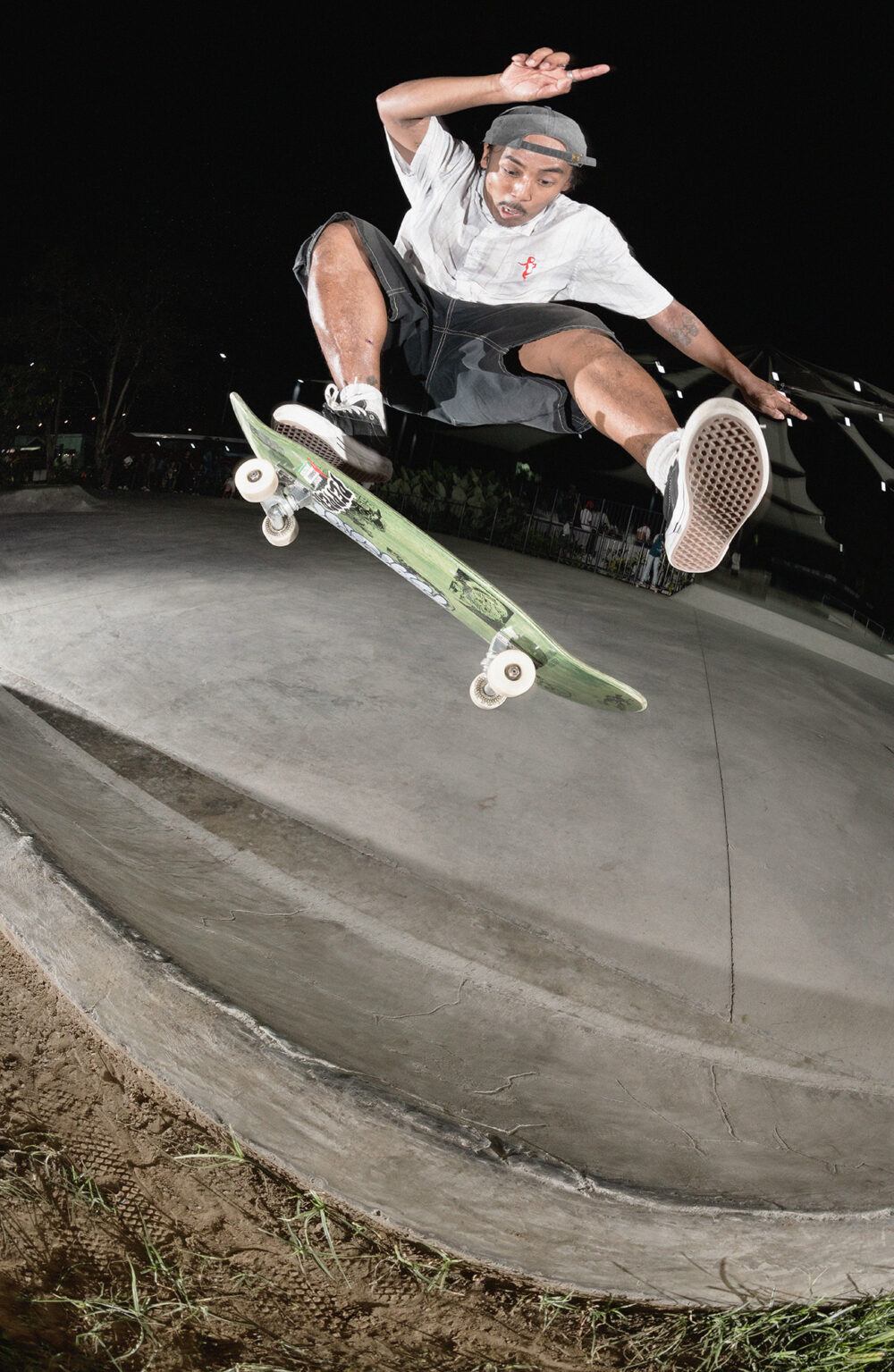
EM – It was like walking into another city’s skate scene and immediately being part of it. I think that’s what’s so special about Cebu as a skate scene and as an island in general. It’s just a very open and welcoming scene. I know I’m going to sound biased, but I think it’s one of the best scenes I’ve ever been involved in.
AC – The first time I went to Cebu, I was blown away by the level of talent and the size of the scene. There were so many talented skateboarders, videographers and people in the scene without support. It’s super organic.
Emilio, tell us about the video you were working on.
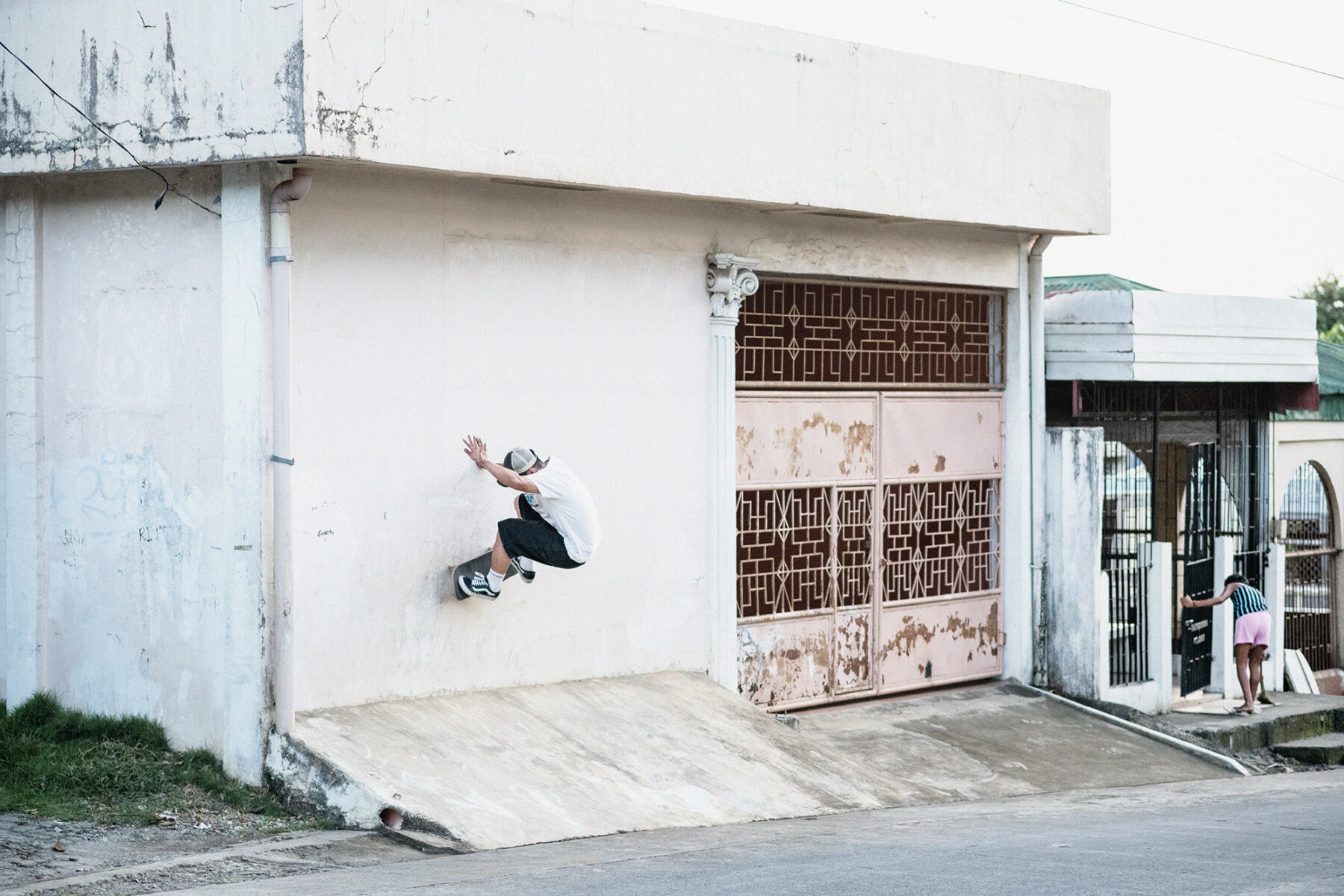
EM – A lot of people travel the world to make skate videos, especially in Asia, but the Philippines has really rough ground and rough spots that are hard to skate, and because it’s quite a colourful country, it looks really good on VX. So I’m very excited to showcase a different landscape of skateboarding, what Push Philippines is – there will be some stuff about the donations in there – but also the incredible skateboarding there. When we were discussing the trip and the content that would come out of it, we knew we were going to have some behind-the-scenes, documentary-style videos to inform people about what we’re doing, but because we had some incredible skaters coming over, and obviously the skaters in the Philippines, we thought: “Why don’t we have a skate video too?” I think it’s cool that you can have a donation programme, but still create skate videos at the same time.
AC – We deal with all the bullshit with other things in skateboarding, or other jobs, and this was an opportunity to do something on our own terms without having to run it by a brand manager or whoever. It was awesome to watch Emilio film with the VX and get heatstroke. It was awesome to watch Cliff (Rigor) and Dani make videos of each other.
Dani, you and your Cebu-based team take care of the media side of things at Push. I was really impressed by the quality of the videos and photos you made during the trip. Can you talk about your approach?
DB – Dude, it just sort of happens naturally. When the donations come in, we figure out where to give them out, pack up the stuff in my car and go. Usually it’s just me and Cliff, sometimes Fam (Kenneth Asprer) too. The idea was to film the donation events and I would explain what was happening on camera. It got really good feedback on Instagram and we just kept doing it. That’s really it.
AC – Skateboarding is very insular and we’re used to portraying the best tricks and the best-looking stuff, but for Push, it’s really about having something that the average person can understand, relate to and follow.
DB – Exactly, that’s how we approach it.
Dani, I heard that you got some presenting work off the back of these videos.
DB – Oh yeah, dude. It’s funny because doing these donation videos was the first time I’ve spoken in front of a camera, and someone saw them and offered me a job hosting a scuba diving show. We’ve filmed six episodes already.
That’s so cool. So, how did the trip in December come about?
DD – A good year of planning. I used a trip I did to Nepal back in 2018 with Free as a template to float the idea to Vans and Amanda (Pérez, Vans Europe) agreed to fund it. Then, later on, Vans APAC and CHPO Brand offered some more funding.
AC – With the national team, we’d been butting our heads and dealing with a lot of situations where we did so much work and got nothing positive back. Not everything was like that, but there was an element of that, and this was the chance to do it on our own terms, strictly for skateboarding.
DB – That’s when we called it Push, when we were coming up on this trip. There was no name for it before that.
DD – There was a period when we were doing the donation programme through Skate Pilipinas. I can’t remember exactly at what point we decided: “We need to do this as a separate thing… We’re doing Push,” but it was definitely during the planning of this trip.
Are none of you are involved in Skate Pilipinas any more?
DD – We’re not involved really.
AC – We’re not part of that and we’re not really focused on that.
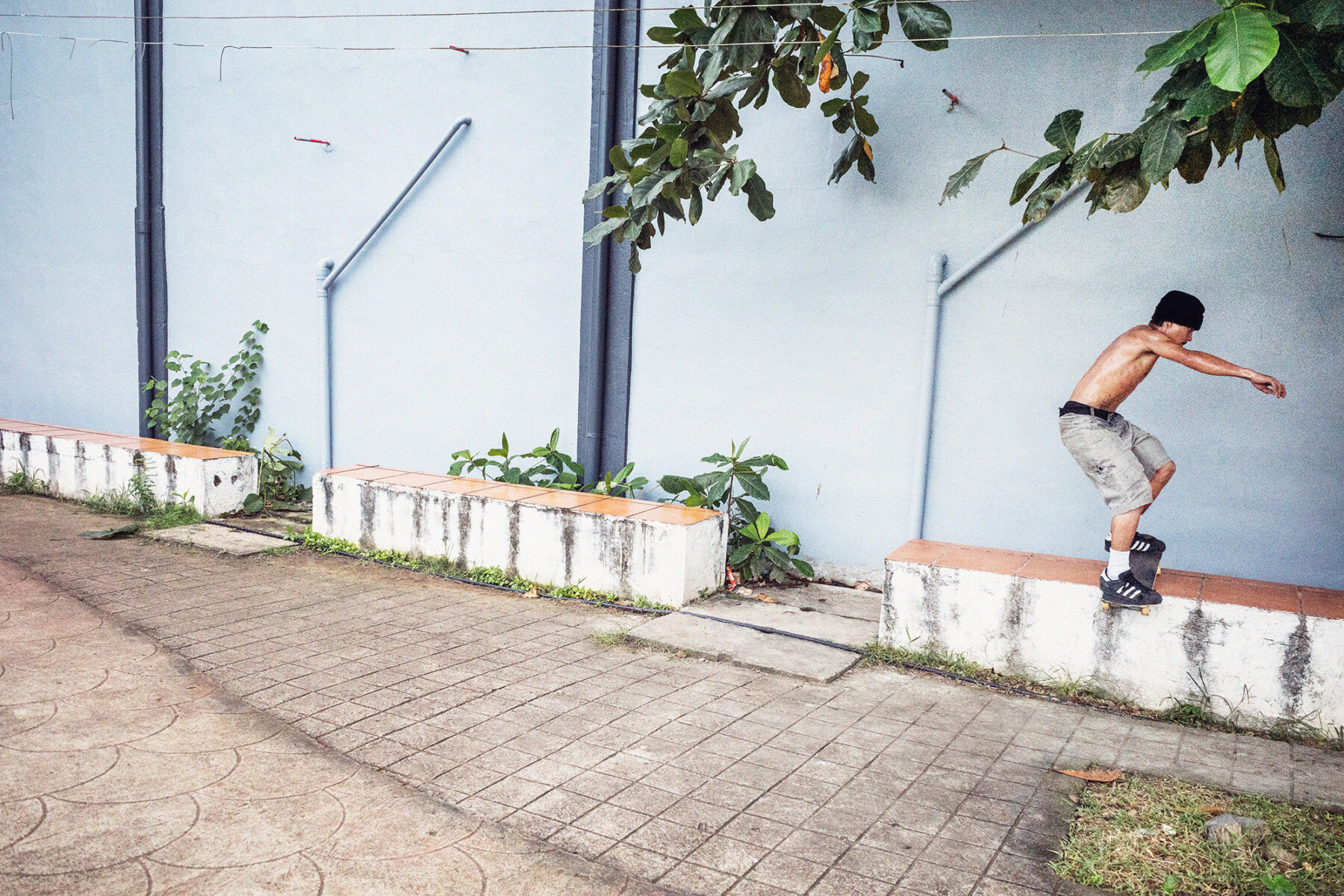
EM – That’s an avenue that lots of skateboarders still want to pursue in the Philippines, which I think is great, but there are also lots of skateboarders, especially people like Smokey (Khyll Siarot) and JM (John Michael Abarca), who want to skate like we want to skate – not just contests, but being out in the streets, filming. We’re promoting that side of skateboarding as well, which I think is cool.
What were your goals for the trip and how did it go?
DD – What we were really trying to achieve was to give out as many donations to as many different communities as we could, and I think that went incredibly well.
EM – Obviously the donations were the driving force of the trip, but we were also able to bring everybody together. Not just us four, but the skate scenes in Cebu, Ormoc and the UK, as well as people from Japan and Germany. Everybody was there celebrating the Philippines and skateboarding. I think that’s what we achieved most from it.
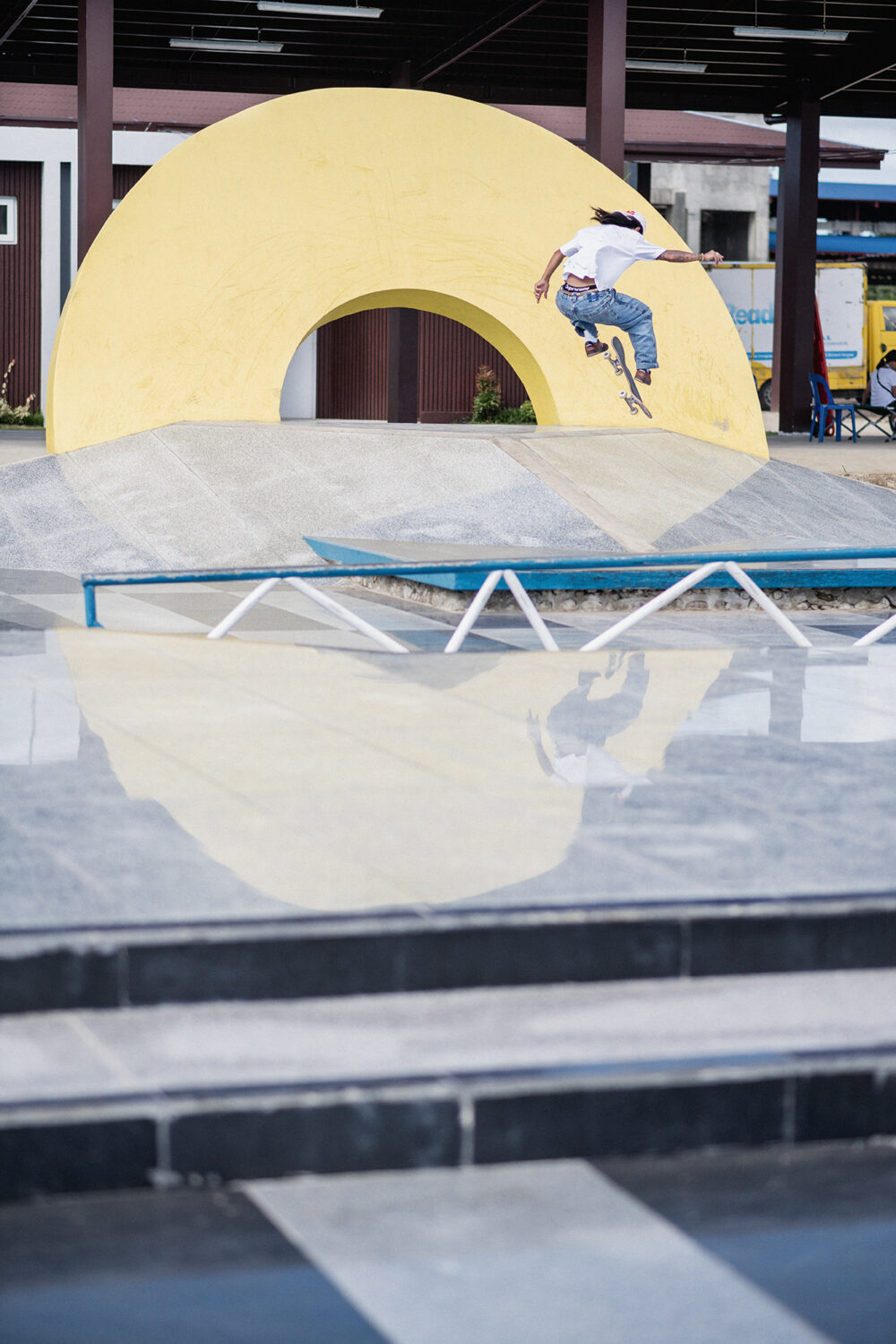
AC – It was amazing that we were part of a scene like Ormoc. I’d never even heard of the place until Margie messaged, saying: “There’s a new skatepark there. They’re talking about sending me. We should go and check it out.” I saw the photos and the park looked insane, like it was Photoshopped. The timing was perfect (we were there for the official park opening) and they (the City of Ormoc) helped out a little to get us there and house us.
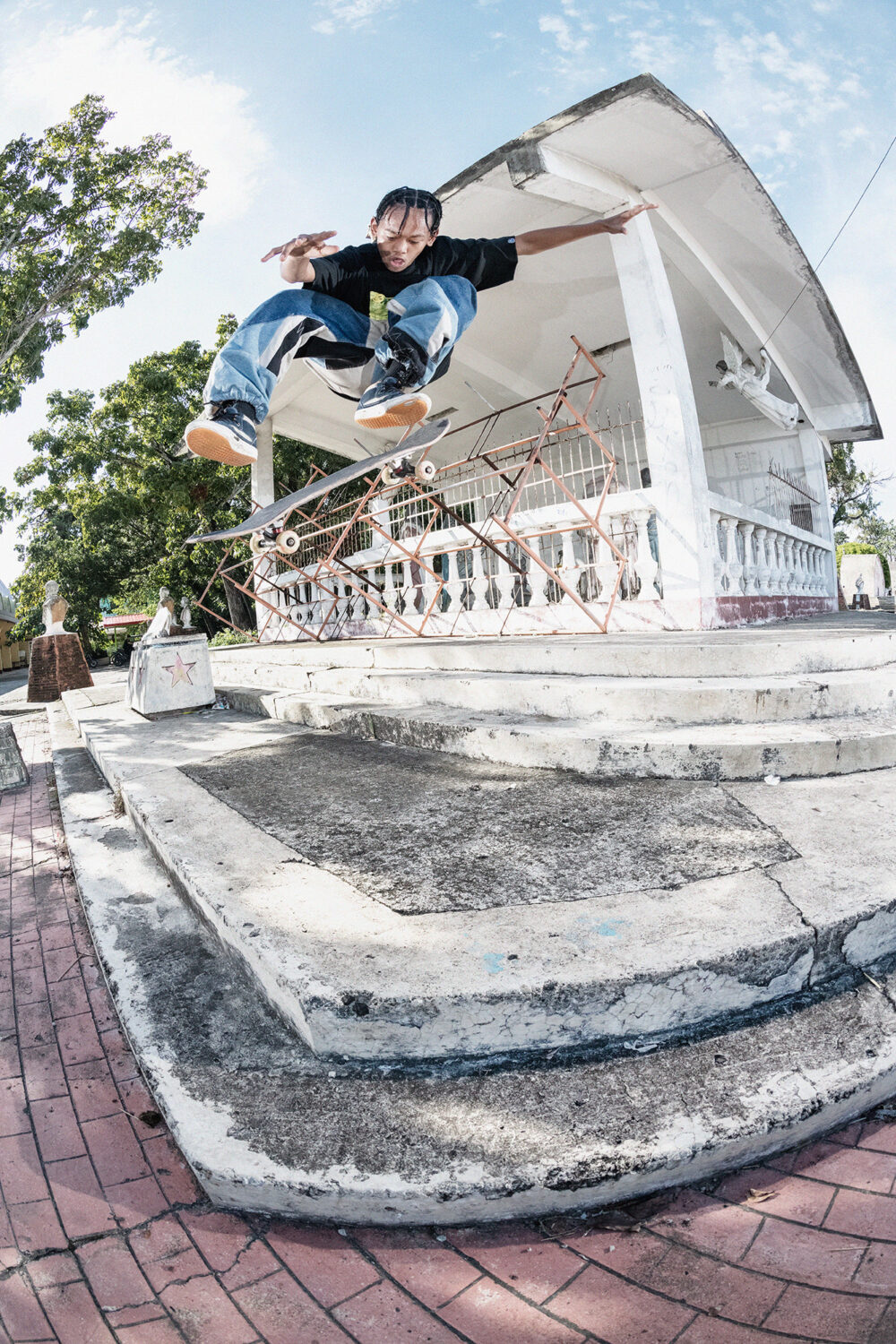
DB – Also, I just want to say that because of this trip, all the locals are so stoked and so proud of themselves. Cebuanos are very proud people and just a few years ago, before Margie, no one knew where Cebu was. They’re so stoked that Grey is going to do a feature on the skaters of Cebu and the scene there.
Was it also a goal of the trip to promote Push outside the Philippines and encourage more donations?
EM – Absolutely.
DD – We’re also working on a website, so there’s a place where people can go to understand what we’re doing, because at the moment, we really just have Instagram.
AC – Also, we’d like to export the programme and help people to do their own donation thing, specific to their own community. And we haven’t talked about sustainability. As an industry, we just go through boards, wheels, shoes, whatever; it’s insane. I’m at a skatepark in China and there are stacks of (used) boards because they’re made here and there are so many people skating here. These boards can find a new life somewhere. That’s a pretty intrinsic part of what Push is.

I noticed that you managed the donation events to ensure skaters got something before handing out goods to people wanting to start skating. Can you talk about this?
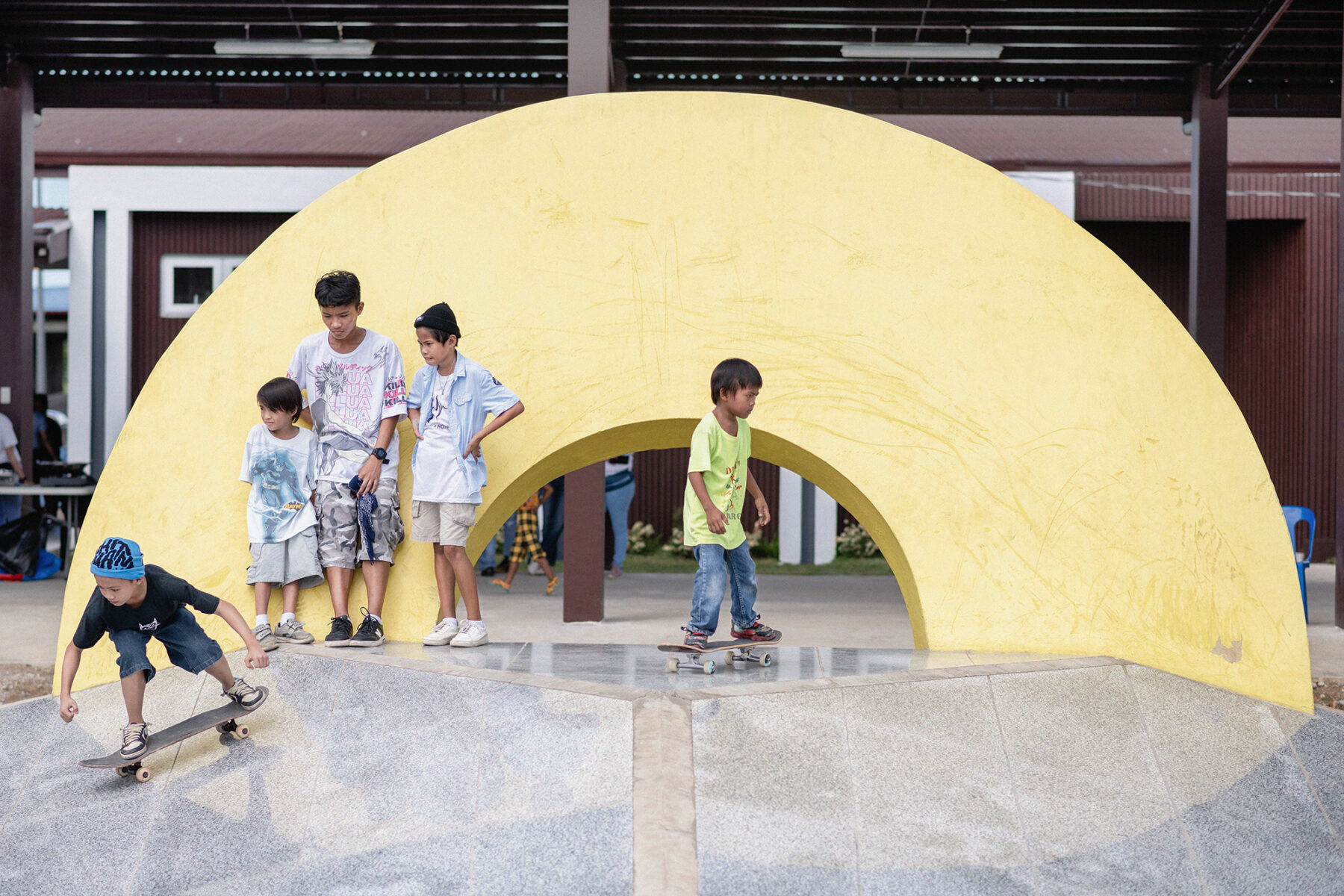
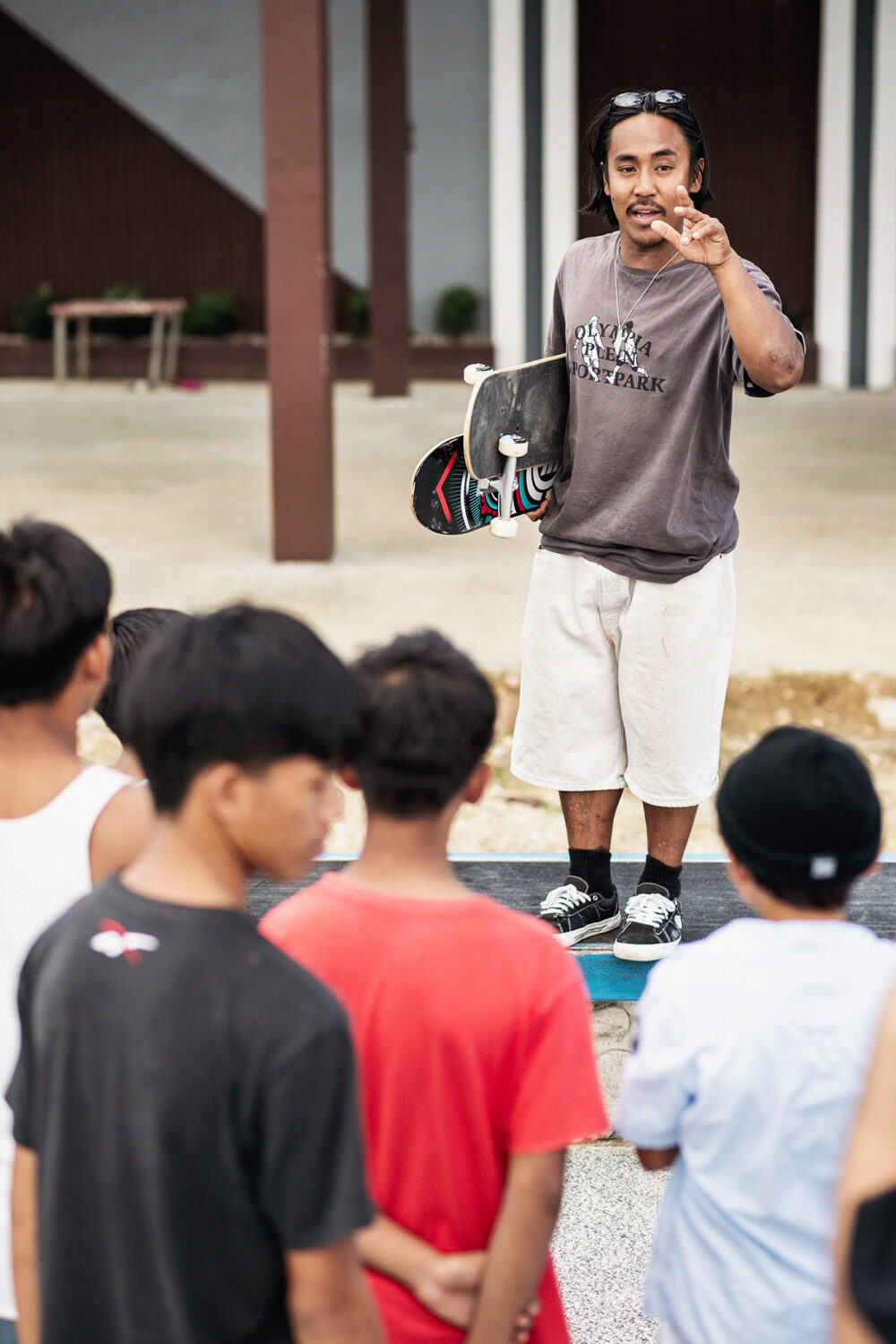
DD – There are people there who are very committed to skateboarding already, and in a way, they’re the people we want to target first, but planting seeds is also very important because that’s how a scene can grow. So it’s about prioritising what’s already there plus also dedicating some effort to introducing people, which is why the workshops were really important. Sometimes it can only take a couple minutes for kids to get hooked on this thing, so if you can offer a workshop and a skateboard, you’re giving kids something to pursue and be really excited about. Giving kids opportunities to play is really important for their general quality of life. That shouldn’t be overlooked.
AC – We want to support the skater who rips, but it’s also legitimate if you just want to roll around on a skateboard and have that play, that joy of skateboarding. In the skate industry, if you skate good, that’s all that matters, but to me, if you can inspire people and make them want to pick up a skateboard through your skateboarding or your actions, then you are a good skateboarder. Everyone associated with Push – and that’s including everyone who came over for the trip – is an amazing ambassador for skateboarding.
That leads nicely to my next question: what role did the visiting sponsored skaters play on the trip and how did they do?
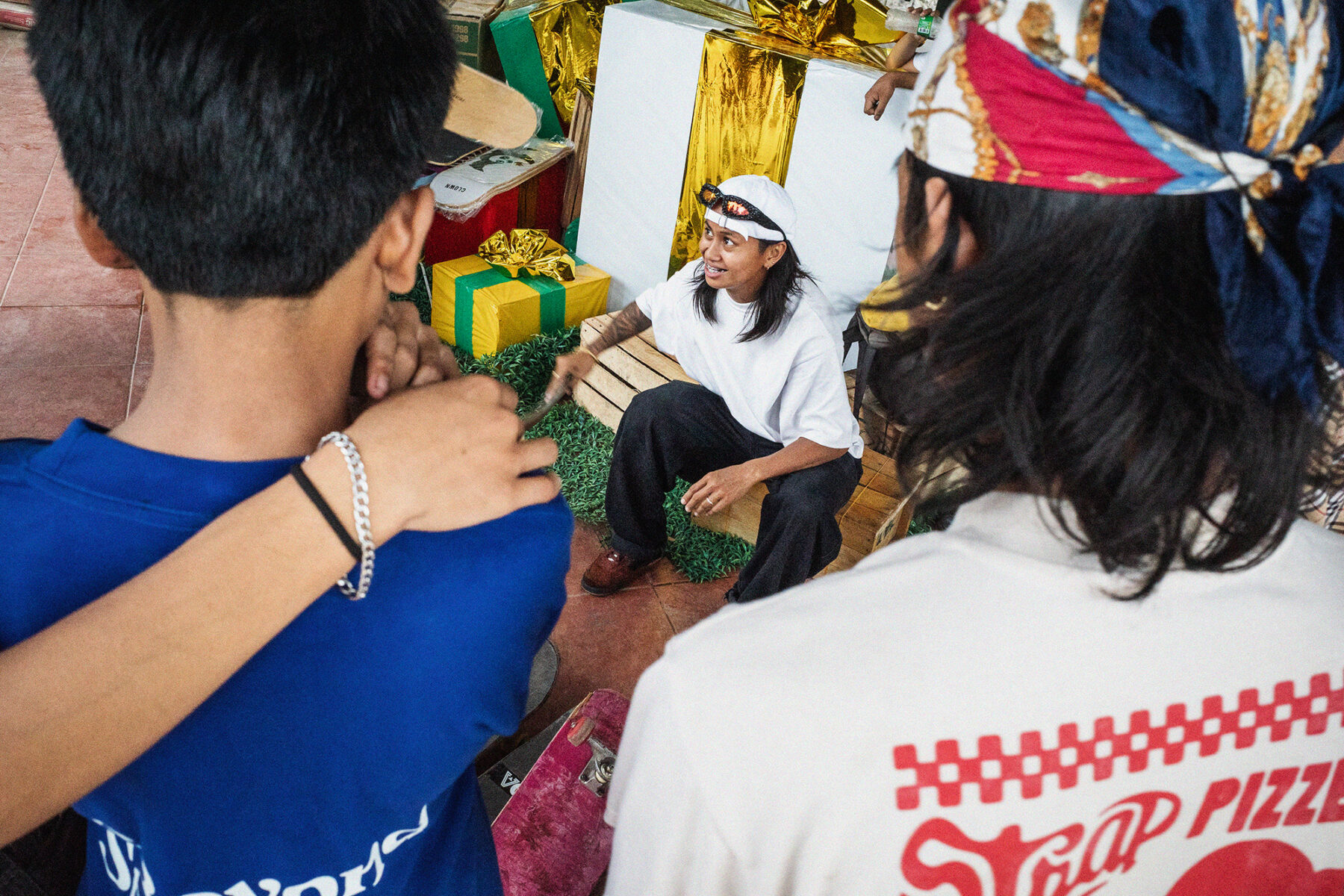
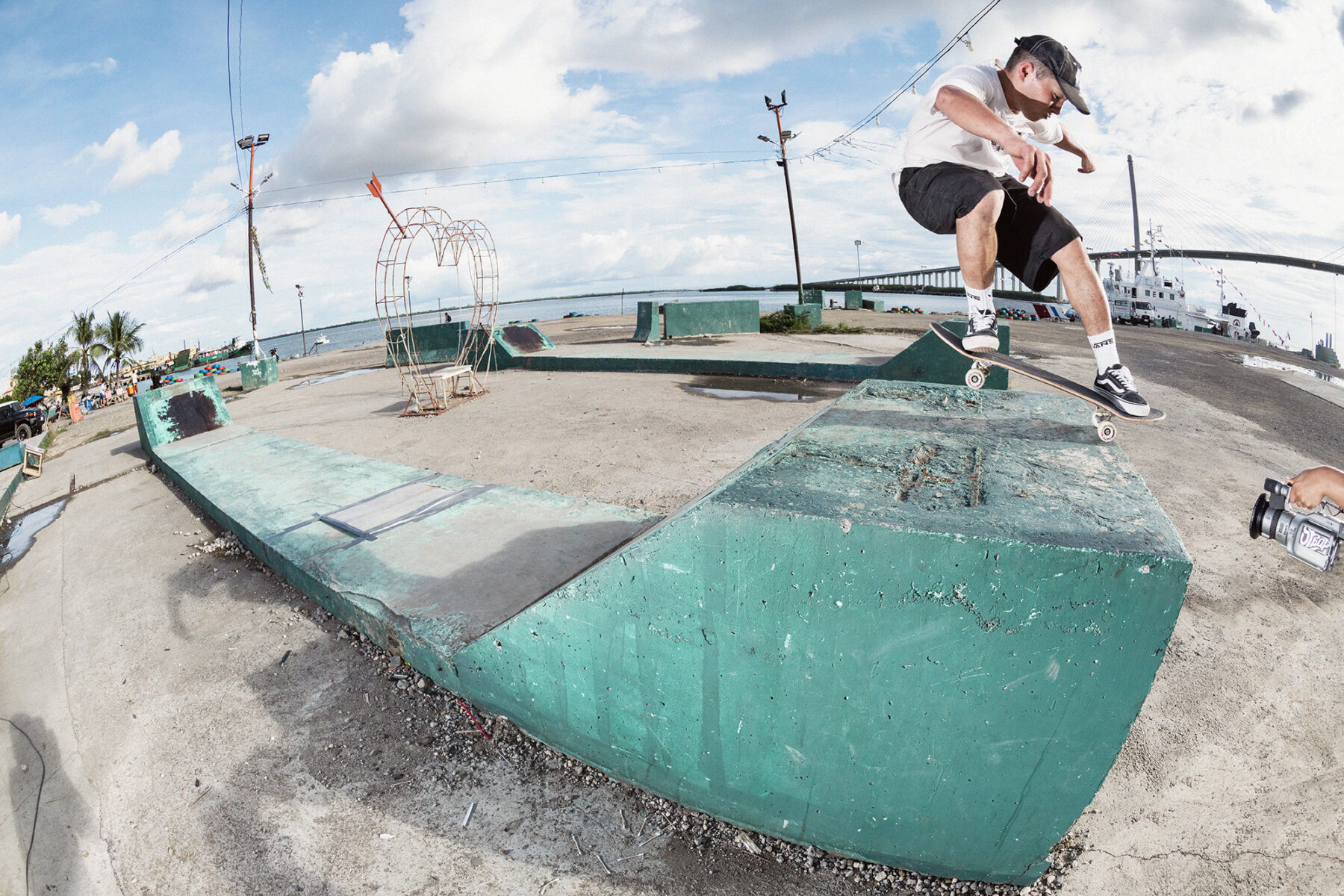
DD – It’s largely what Ant said. I invited people who I knew would be good ambassadors and also would be good in workshop situations. Conor and Helena were amazing people to have in that respect, Margie too. But also, having skateboarders who have careers and are from countries where that is easier than in the Philippines can inspire a certain kind of route. I know the reality for Filipino skaters is really tough, but I think being able to engage with positive role models like Helena, Conor and Margie is really important. They have this career, but they’re also amazing people who can inspire.
EM – What we wanted from them was to engage and talk. Helena did an incredible job. She became very personal with a lot of the skaters and developed a good working relationship with Margie when they were doing workshops together.
Tell us about the women and girls event at Talisay.
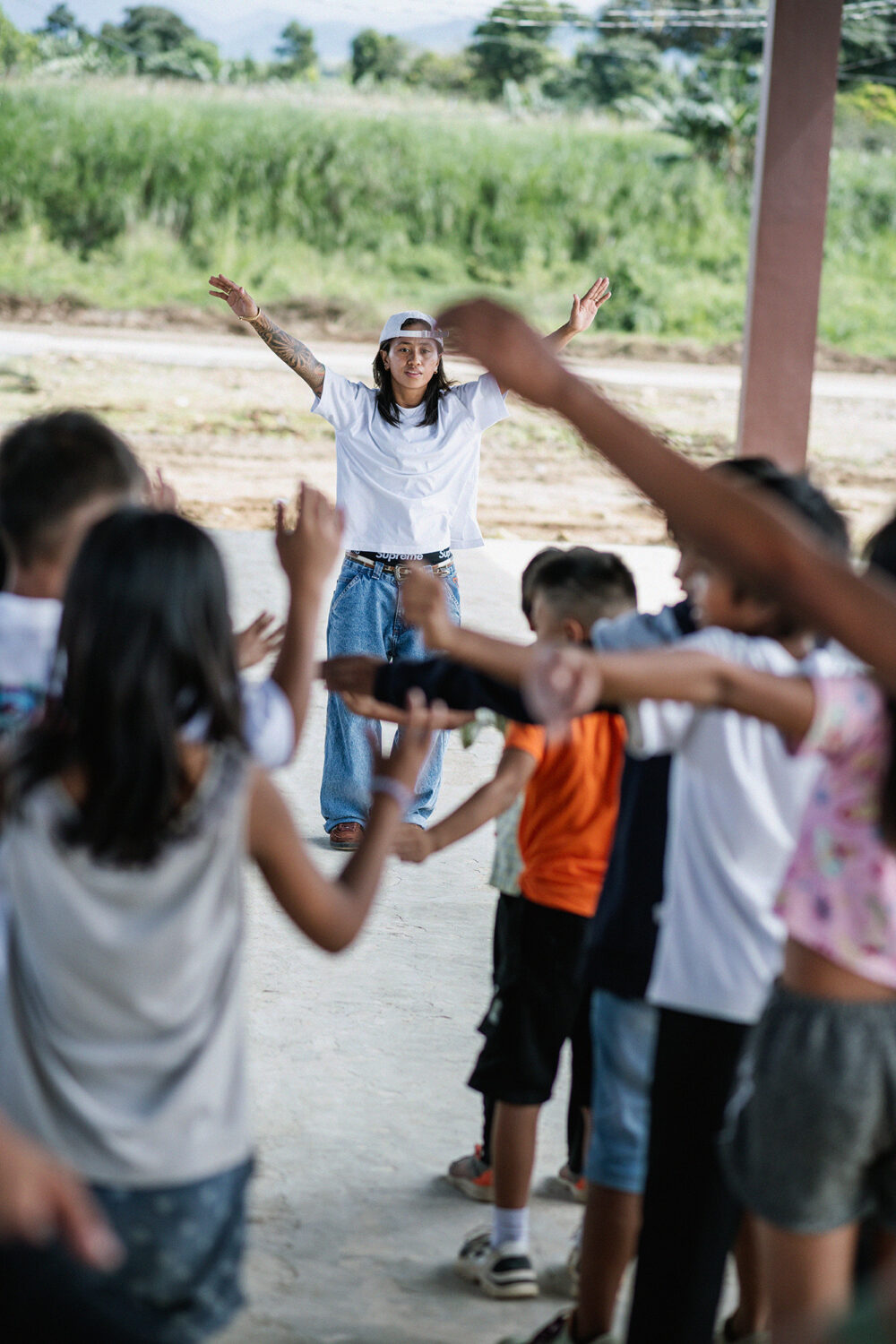
EM – I guess we just wanted to ensure that, without trying to segregate it, there was an event where girls would be at the front of the line and able to get some boards.
AC – In the Philippines, there are really rigid gender roles, so it’s super important to show who Helena and Margie are and that they have found a place in skateboarding.
I was really impressed by Motic (John Flory Panugalinog) and Margie and how they carried themselves on this trip, especially at the donation events, but also how they looked out for the younger skaters on street missions as well. Margie’s pickup was always full of skaters, who she kept fed and watered. Can you guys talk a little bit about these two and their efforts to help younger skaters?
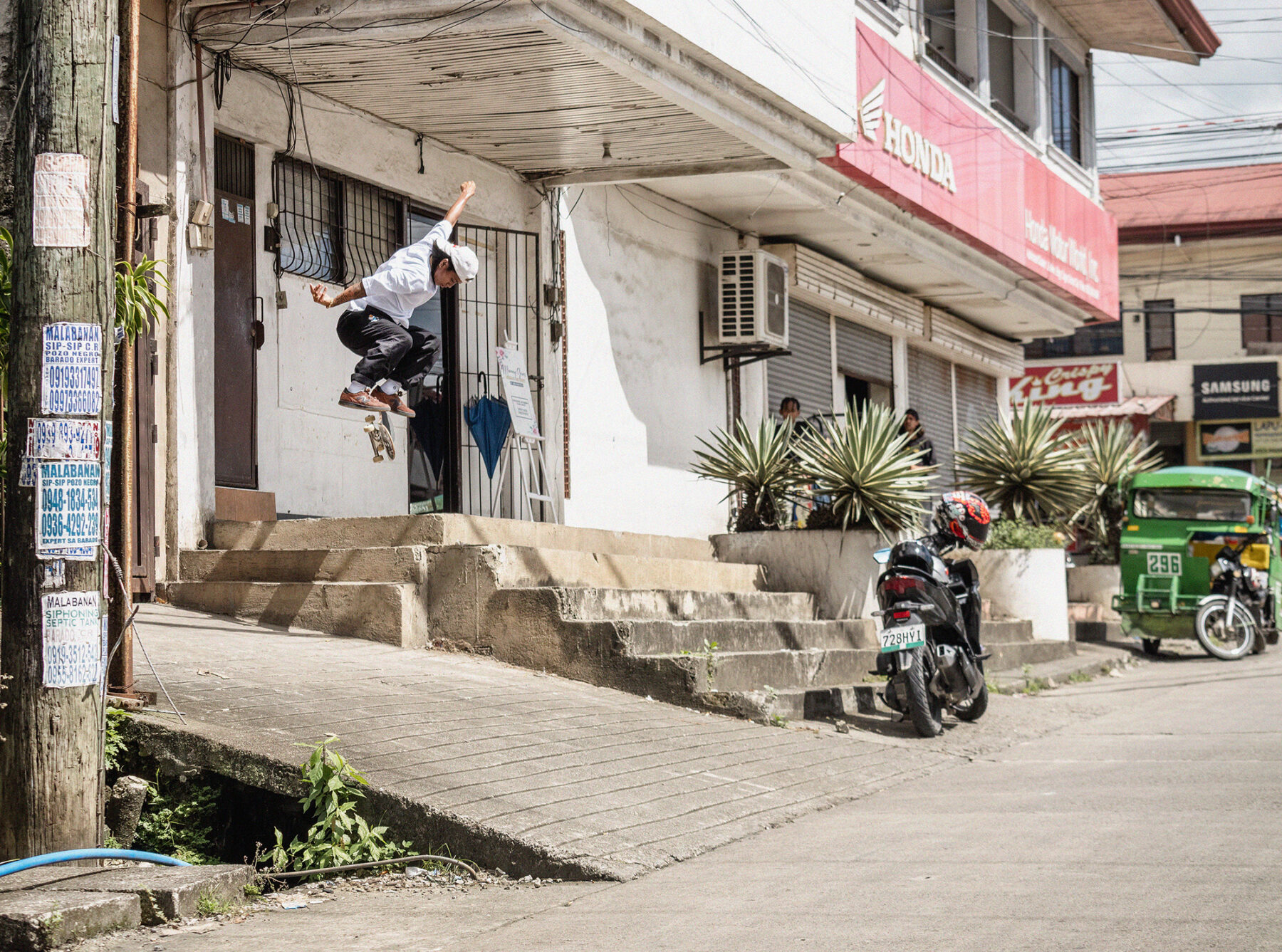
AC – I mean, they are those skaters. They see themselves in all of those kids. They’re the only skateboarders in the Philippines who get salaries from international companies. There are a lot of sponsored skateboarders – Cliff has a pro truck, wheel and board – but in terms of making a living, it’s just those two right now and they are super conscious of it. What you saw, Henry, was them seeing themselves and trying to give back. Margie looks out for so many kids, Motic too. It’s super inspiring to me.
EM – Obviously it’s amazing to talk about that, but Filipinos in general look out for one another. I think it’s a cultural thing. There’s a filmer out there, Caryl (Tello), who is one of the people in the group with a job, and even though he’s not earning loads of money, he’s doing the same as what Margie and Motic do for the others: driving them around and getting them food. It was beautiful seeing the way the skaters in different crews look out for one another. I guess Margie and Motic probably grew up in that environment. DB – Yeah, that was spot on.
Do you see a career similar to Margie or Motic’s for any of the younger skaters?
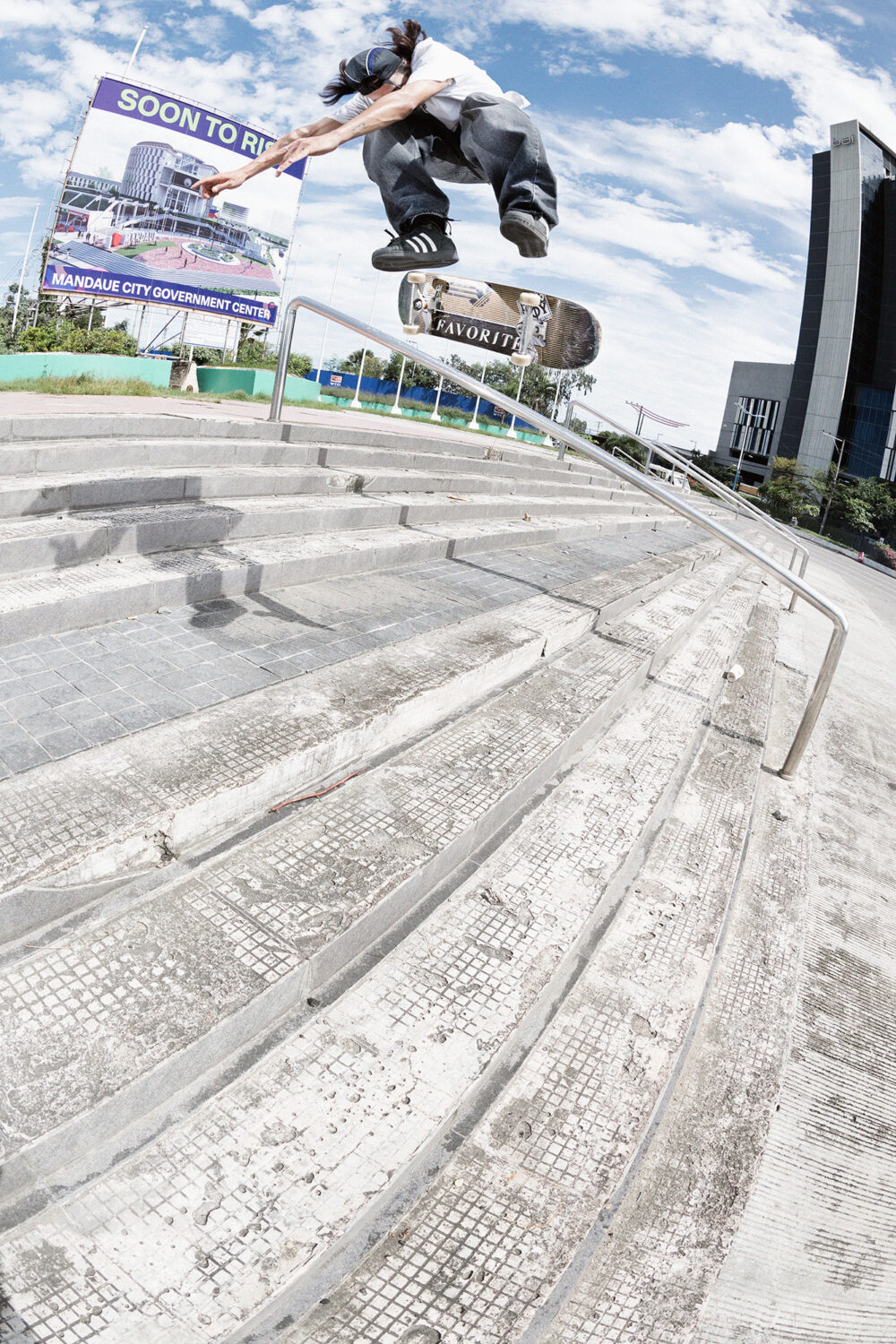
AC – Because there are so many good skaters internationally and the level is so high, it’s really tough to make it in skateboarding no matter where you are, even if you have all the opportunities. So for me, the reality of making a living from skate-boarding (in the Philippines) is hard.
DB – It’s almost out of the picture. I don’t even think about that. The stuff I do to help these kids is not for them to get a career out of it because the chances are so small – it’s literally just Margie and Motic.
AC – Motic has something special, but so do so many kids. Smokey is such a rad skater, JM is such a rad dude, Cliff is a pro skateboarder – he skates good and he carries himself well – and Edel (Tribiana) has a skate shop (Strap), and does so much for the scene, but he cannot sell skateboards in Cebu, so there are all these obstacles. The reality is super tough.
DB – I do whatever I can to help these kids, like connecting them with sponsors, but my hope for these guys is for them to get into skateboarding, enjoy it, and maybe get something out of it, like getting into art, photography, music or whatever.
EM – I think there are lots of routes that skateboarding can inspire people to follow, but there’s also resilience and a general attitude towards life, attributes skaters can take elsewhere in life.
AC – To learn a skateboard skill, you have to be dedicated, and that can help you in life. You break things down into specific pieces, put them together and you practice until you get it. That’s the gift of skateboarding and I think it gets a bit lost. Because of that, Motic has started his own business (Sg4l Skate Shop). You saw the Philippines – it’s sobering. Nobody has anything, kids drop out of school – Margie dropped out of school at 12. You forget that, coming from the United States or wherever, you have all these opportunities, this support network, skateboarding and being privileged, and these kids… it’s like skateboarding can save their lives, point them in a positive direction and give them something they’d never get anywhere else, so it’s really important to be a part of this.
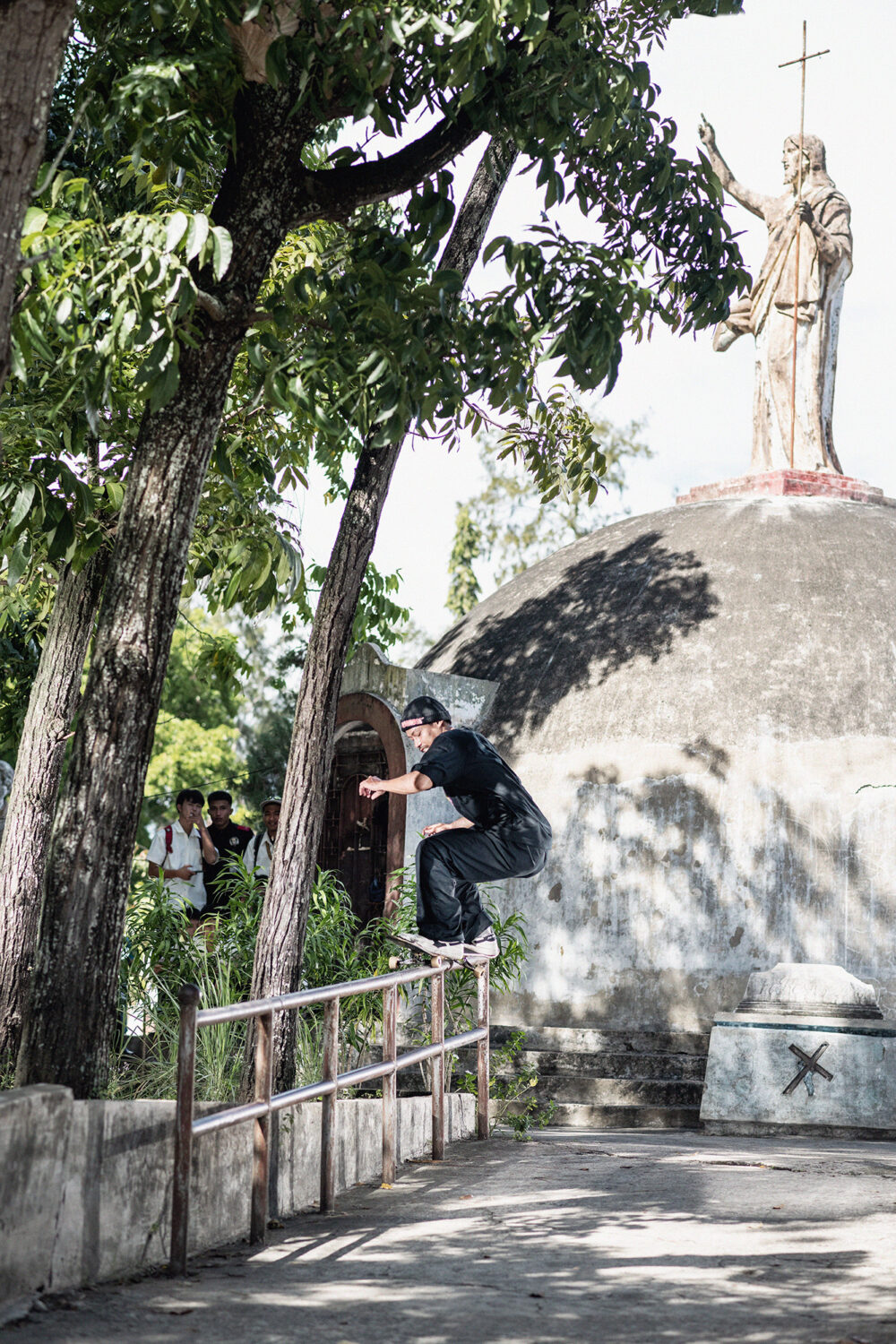
How can people support Push?
EM – Because we have that element of sustainability, we’re never going to say no to donated equipment.
DD – There’s also the other side of donating. The balikbayan system is quite cheap, but with more money, we can send more.
DB – The monetary donations are also for getting the boards to all the small places outside the city (Cebu). That’s one thing we need help with.
DD – I’m hoping to have a donation link built into the new website, but for now, you can donate (money) via our Instagram page.
And get in touch about donating equipment.
DD – Yeah. I really want to focus on sustainability, so if people in London or the UK want to send us a box of their old stuff, we’re always going to take it and it will always have a home.
You can support Push Philippines via its brand new website.